Empowering Tech Teams in the AI-Assisted Development Era
How context engineering transforms team collaboration and amplifies human expertise through AI assistance
The Challenge
In the AI engineering era, the central challenge is integration - bringing together AI's strengths with human creativity, judgment, and architectural vision. Teams need frameworks that harness AI's capabilities while ensuring that human insight remains at the core of decision-making and innovation.
Team Dynamics in the AI Era:
- The Experience Paradox: More AI adoption requires more experienced team members, not more people - keeping teams lean while reducing communication overhead
- Quality vs Speed Balance: The real question for teams isn't how fast AI can produce, but how good the output is when AI is involved
- Role Evolution: Traditional development roles transform as AI handles routine tasks, requiring new collaboration patterns
- Context Ownership: Teams need clear processes for who creates, maintains, and selects contextual information for AI assistance
- Scalable Processes: Creating repeatable workflows that work for different team sizes and project complexities
Communication Challenges Between Tech Roles in the AI Era
As teams adopt multiple AI tools, each role (architect, developer, product manager, designer) produces valuable information across scattered locations such as design files, documentation platforms, project management systems, and personal notes. This fragmentation creates communication bottlenecks and prevents LLMs from accessing the complete context required to maximize productivity. The real challenge is not simply that individuals wear multiple hats, but consolidating diverse role-specific knowledge into a centralized format that both humans and AI can easily consume.
Team Empowerment Through Context Engineering
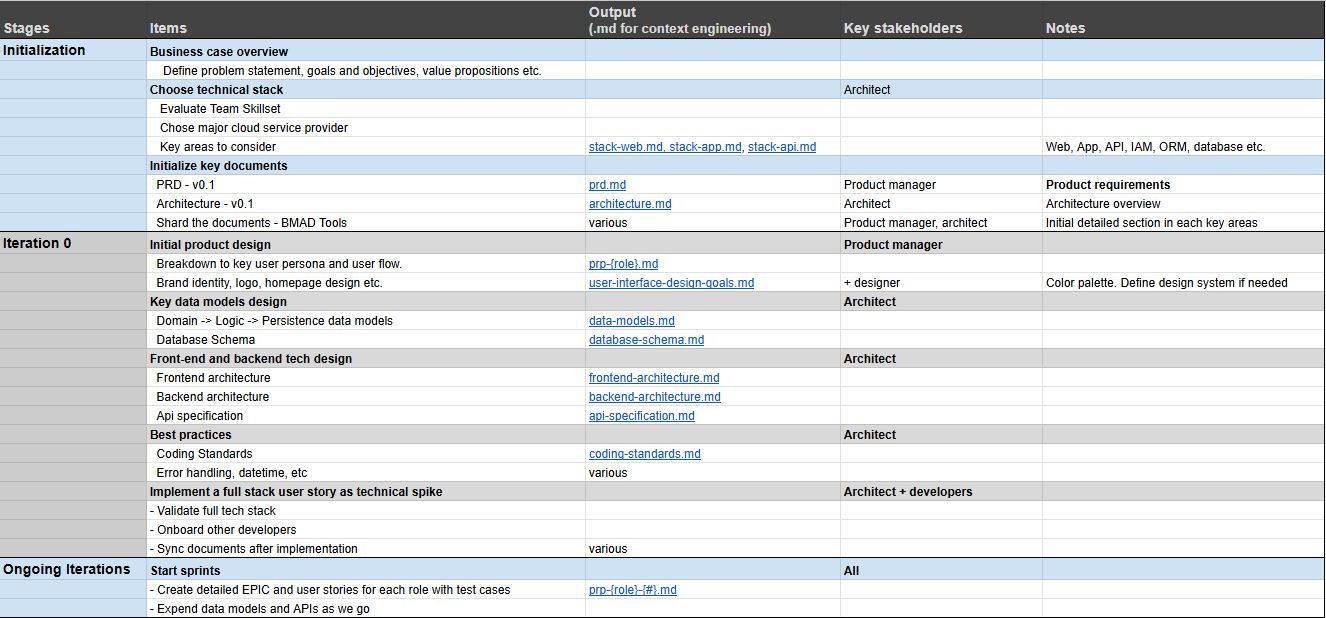
Enterprise AI Engineering Workflow: Role-based context engineering across development stages
Developed a comprehensive context engineering methodology that empowers teams through role-based documentation, strategic context slicing, and quality-first AI collaboration frameworks.
Role-Based Context Engineering Workflow
Our workflow demonstrates how different roles collaborate through structured context engineering, enabling teams to leverage AI while maintaining human expertise and decision-making authority.
Initialization Stage:
- Architect: Defines technical stack and system architecture
- Product Manager: Creates PRD and defines business requirements
- Team: Establishes shared documentation using BMAD tools
Iteration Cycles:
- Product Manager: Creates detailed user stories and acceptance criteria
- Designer: Develops UI/UX specifications and design systems
- Architect + Developers: Implement features using contextual AI assistance
Role-Specific Context Contributions:
Each team role contributes specialized markdown files to the source code repository, creating a comprehensive knowledge base that empowers AI to understand both technical requirements and business objectives instantly:
Architect Contributions:
stack-web.md,stack-app.md- Technology decisionsarchitecture.md- System design patternscoding-standards.md- AI behavior rulesbest-practices/- Implementation guidelines
Product Manager Contributions:
prd.md- Product requirementspro-role.md- User personas and flowsuser-interface-design-goals.md- UX objectives
Designer Contributions:
- Design system specifications
- Color palette and visual identity
- Component design patterns
- User interface design goals
Developer Contributions:
data-models.md- Entity definitionsapi-specification.md- Endpoint contractserror-handling/- Exception patterns- Implementation feedback loops
BMAD Framework for Team Coordination:
Implemented the BMAD (Breakthrough Method of Agile AI-Driven Development) methodology to coordinate team contributions:
- Template-Driven Collaboration: Standardized formats ensure all roles contribute effectively
- Automation Commands: Reduces manual documentation overhead for busy teams
- Quality Validation: Built-in checks ensure documentation meets AI consumption standards
- Decision Support: Framework guides technology and architectural choices across roles
Framework Source: BMAD-METHOD Repository
Example markdown documents
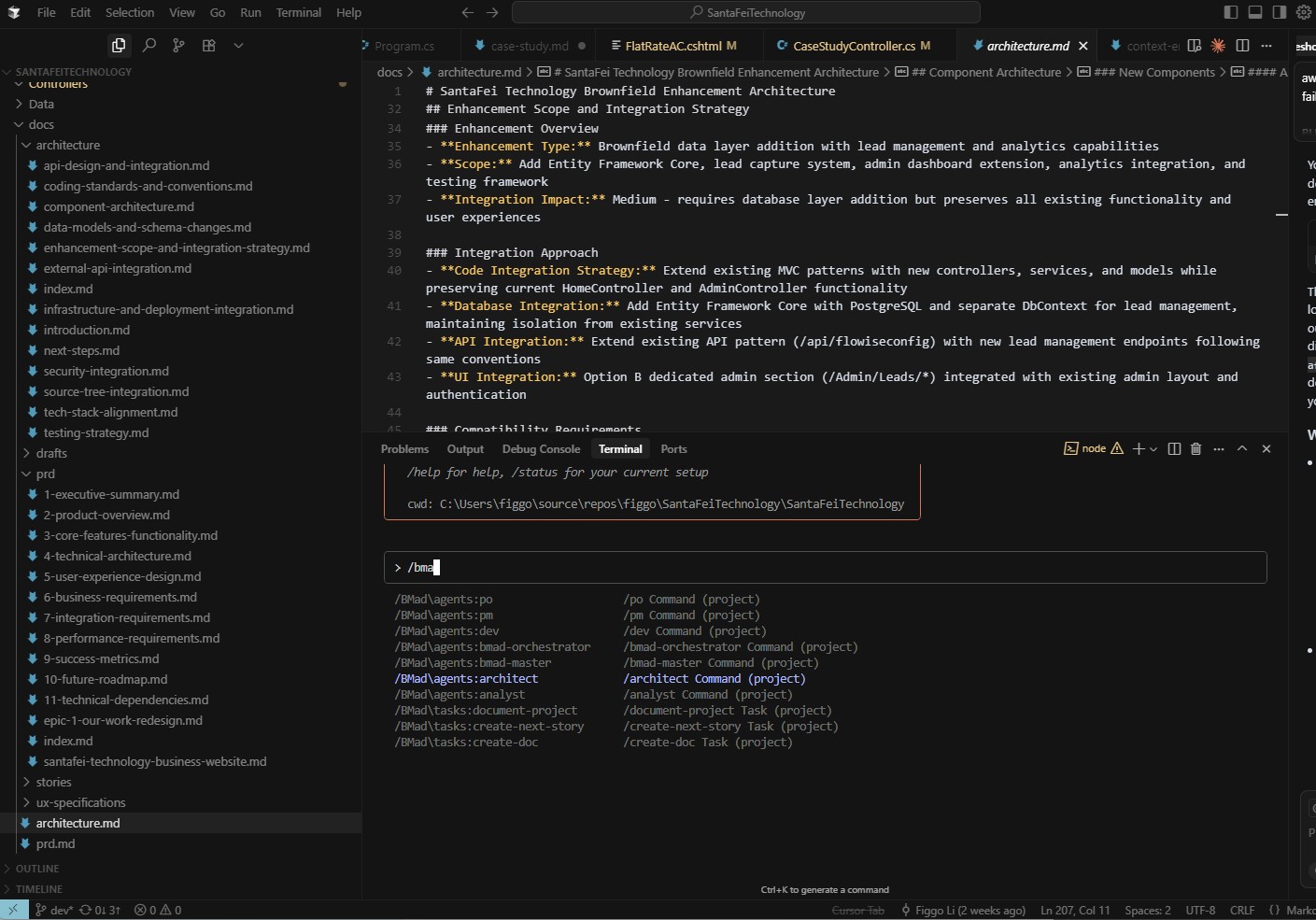
Example BMAD Roles and Automation
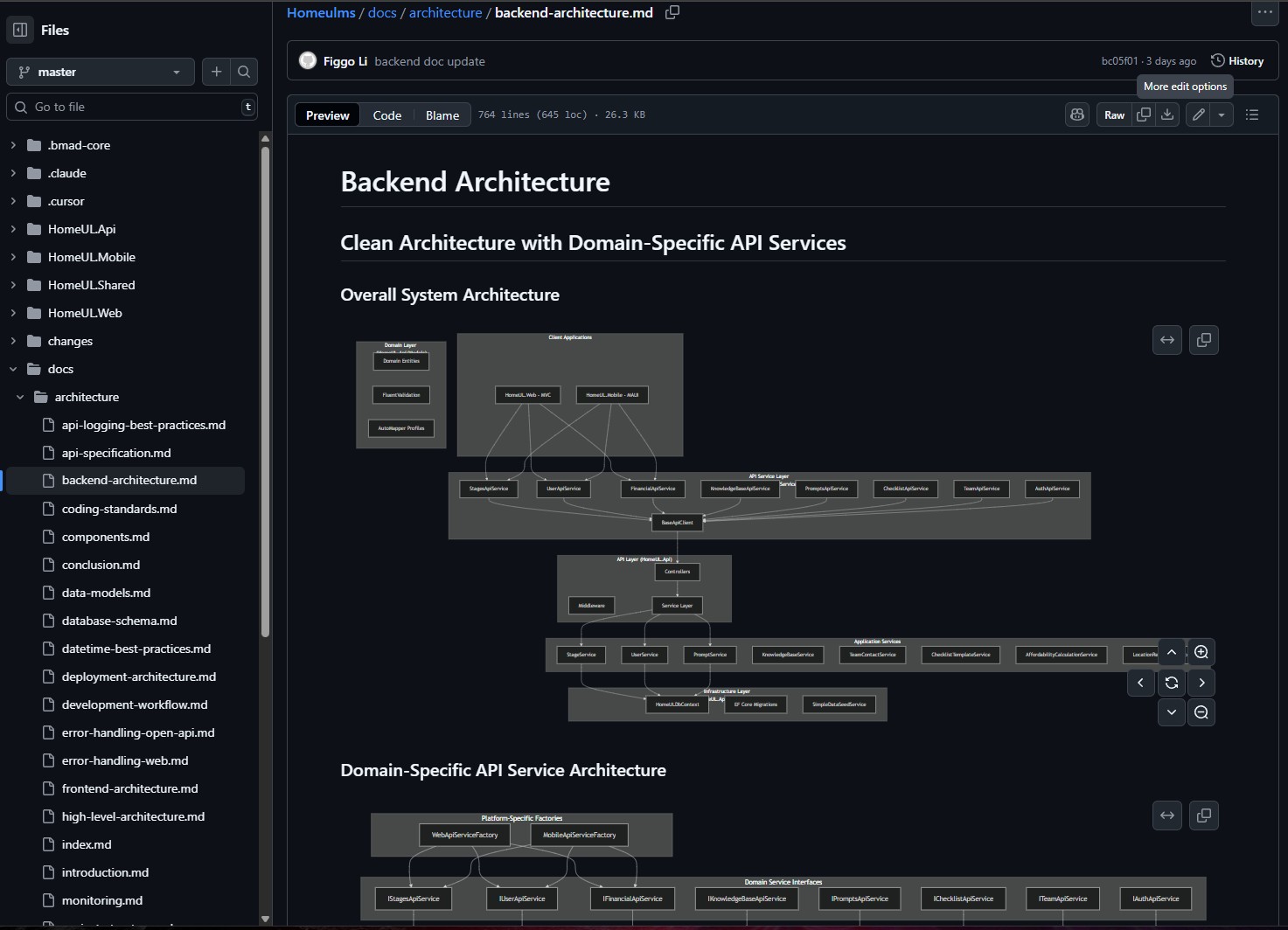
Architecture docs in Markdown, easy to read on GitHub.
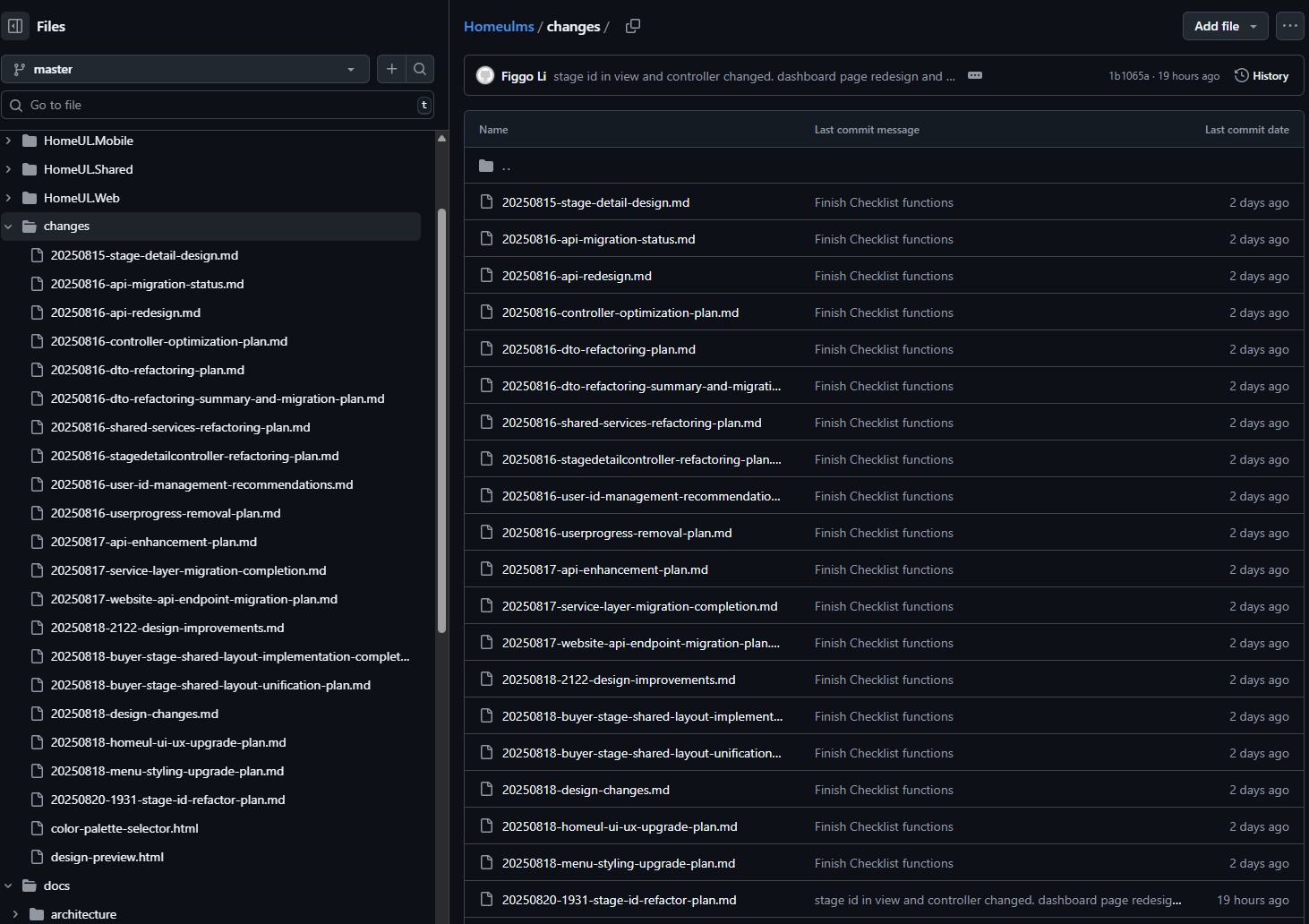
Tip: Ask AI to draft the plan and document it in Markdown.
Context Engineering Methodology
We developed a sophisticated approach that recognizes centralized context organization as the key to AI success. By consolidating scattered role-specific information into focused markdown files within the source code repository, we enable both strategic context selection and instant AI accessibility.
Centralized Context Architecture:
- All role documentation stored in source code repository
- Focused, single-responsibility markdown files
- Separated architectural patterns from implementation details
- Eliminates external dependency for AI context loading
AI-Optimized Information Flow:
- Human decision-making for context relevance
- Task-specific information delivery from central repository
- LLM coding agents access complete context instantly
- Iterative context refinement based on output quality
Centralized Markdown in Source Code Repository
Storing markdown files directly in the source code repository revolutionized both team communication and AI productivity:
- Single Source of Truth: All role-specific knowledge consolidated in one accessible location alongside the codebase
- Version Control Integration: Documentation changes tracked with code changes, ensuring synchronization
- AI Agent Accessibility: LLM coding agents can instantly access complete project context without external API calls
- Communication Simplification: Eliminates scattered information across multiple tools and platforms
- Developer Workflow Integration: Team members work with documentation using familiar Git workflows
- Instant Context Loading: AI tools can read entire project context in seconds rather than minutes
Team Empowerment Results & Impact
Quality-First Team Philosophy
By shifting the focus from speed to the question, "What level of quality can AI help us achieve?", we empowered each role to bring its expertise while leveraging AI assistance. This mindset amplified human capabilities, resulting in a more skilled, collaborative, and productive development environment.
Team Empowerment Outcomes
Individual Role Enhancement:
- Architects: Focus on high-level design while AI handles implementation details
- Product Managers: Define requirements that AI can directly consume and implement
- Designers: Create specifications that seamlessly translate to code
- Developers: Become AI conductors rather than code writers
Team Collaboration Benefits:
- Centralized Knowledge Base: All role-specific information accessible in one repository location
- Reduced Communication Overhead: Shared context eliminates repetitive explanations
- AI-Ready Documentation: LLM coding agents instantly access complete project context
- Consistent Quality: All roles contribute to unified standards
- Scalable Knowledge: Context documents preserve team expertise in version control
- Multi-Role Flexibility: Individuals can switch roles using the same centralized context framework
Team Empowerment Breakthrough
Context engineering transformed our approach from "AI replacing humans" to "AI amplifying human expertise." By centralizing all role-specific knowledge in markdown files within the source code repository, we eliminated communication bottlenecks and enabled LLM coding agents to access complete project context instantly. Each team role maintains ownership of their domain knowledge while contributing to a shared, version-controlled context framework that scales across different team sizes and organizational structures.
Technical Implementation Highlights:
- Developed responsive, mobile-first design using Bootstrap 5
- Implemented secure Google OAuth authentication for admin access
- Integrated Flowise AI chatbot for intelligent customer support
- Containerized application with Docker for consistent deployment
- Deployed to AWS ECS with Application Load Balancer for scalability
- Implemented health check endpoints for monitoring
- Created admin panel for real-time chatbot configuration
Technologies Used
Context Engineering Highlights
- Industry: Technology Consulting
- Context Shards: 15+ focused documentation files
- Code Quality: 98% first-pass acceptance
- Speed Increase: 75% faster development
Recommended Readings
All Case Studies
Flat Rate AC Real-Time Quote and Work Order Management Solution
Context engineering revolutionized how we built FlatRateAC, a comprehensive HVAC quote and job management platform.

24/7 Customer Support with AI Agents
Solved LLM context limitations using RAG for company knowledge and Model Context Protocol for real-time data access on SantaFei.com and FlatRateAC.com.